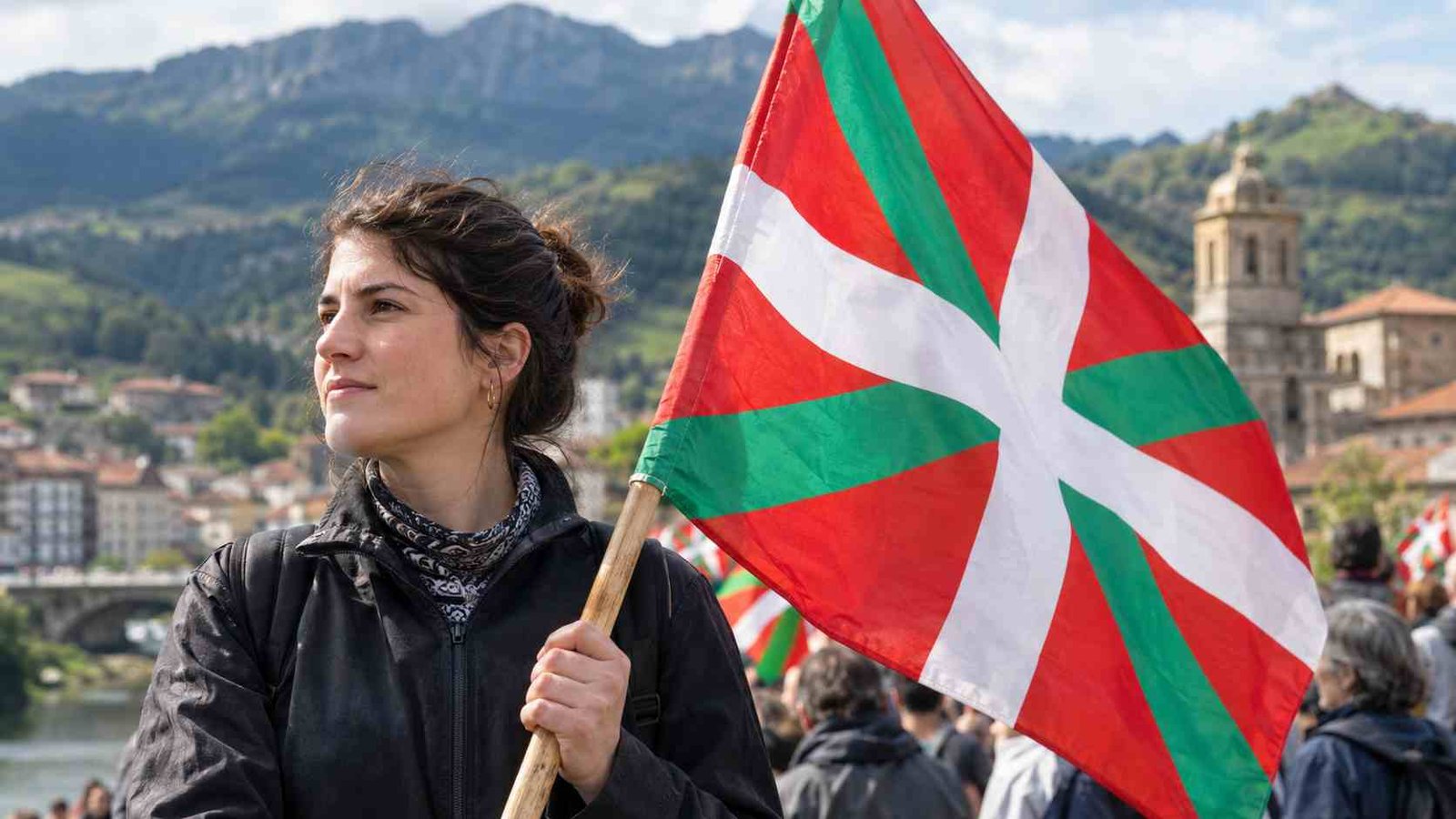
Who Are the Basque Separatists?
Basque separatists are people and political parties in northern Spain and southwestern France who want the Basque Country to become an independent state. For decades the term was defined by ETA’s armed campaign; today, Basque separatism is a legal political movement pursued through elections, not violence.
Quick facts
- Homeland: The Basque Country (Euskal Herria) spans northern Spain’s Basque Autonomous Community and Navarre, plus a smaller area in southwestern France.
- Language: Euskara, a language isolate unrelated to Spanish or French.
- Defining armed group: ETA (Euskadi Ta Askatasuna), active from 1959 to 2018.
- Deaths tied to ETA: commonly put at 829 to 854, depending on the count.
- Violence ended: a ceasefire in 2011, followed by full dissolution in 2018.
- US terrorism listing: ETA was on the State Department’s foreign terrorist list from 1997 until 2022.
- Leading parties today: the PNV, which currently governs, and EH Bildu, a pro-independence coalition.
A homeland split between two countries
The Basque people are an ethnic group with their own language, Euskara, which linguists classify as a language isolate — it has no proven relatives among Europe’s other languages. Their historical homeland includes the Basque Autonomous Community in northern Spain, made up of the provinces of Álava, Biscay, and Gipuzkoa, along with Navarre and a stretch of southwestern France often called Iparralde. As of January 2023, the Basque Autonomous Community had a population of about 2.2 million people. Basque speakers are a minority even within that territory: a 2021 survey found that about 36% of people over 16 in the Basque Autonomous Community spoke Basque, compared with roughly 14% in Navarre and 20% in the French Basque Country. Basque Country (autonomous community) +2
Where Basque separatism began
Organized Basque nationalism dates to the late 1800s. Sabino Arana founded the Basque Nationalist Party (PNV) in 1895 as a Catholic, conservative party seeking self-government and the defense of Basque traditions and language, and it remains active today as a moderate nationalist party. It is the second-oldest political party still operating in Spain, after the Spanish Socialist Workers’ Party. alephWikipedia
That early movement stayed within legal politics. It was decades later, under a dictatorship that suppressed Basque language and identity, that a more radical and eventually violent strand of separatism emerged.
ETA: the group that defined the movement
ETA was founded in 1959 by student activists who felt the PNV was too passive, at a time when General Francisco Franco’s government was cracking down on Basque language and identity. The group’s name stood for Euskadi Ta Askatasuna, or Basque Homeland and Freedom. encyclopediahawaiipublicradio
ETA’s campaign escalated over time. Its first fatal attack came in June 1968, when a member killed a Civil Guard officer at a checkpoint. Its best-known operation came in December 1973, when it killed Luis Carrero Blanco, Franco’s prime minister and presumed successor, with a car bomb in Madrid. Violence didn’t stop with the end of the dictatorship. The Basque region was granted autonomy in 1979, yet 1980 turned out to be ETA’s deadliest year, with at least 92 people killed. A separate scandal emerged in the 1980s when Spanish government officials illegally organized death squads, known as GAL, that killed around 28 people linked to ETA between 1983 and 1987. ETA’s own worst single attack came in 1987, when a bombing at a Barcelona supermarket parking garage killed 21 shoppers. ETA (terrorist group) +4
By the time it disbanded, ETA was classified as a terrorist organization by both the European Union and the United States, and its overall toll is usually put between 829 and 854 deaths, alongside thousands of injuries and dozens of kidnappings, depending on which researchers’ count is used. thelocal
How the armed campaign ended
ETA’s decline began with a formal renunciation of violence. In October 2011, the group announced an end to its armed struggle after more than 50 years, saying it was laying down arms to advance talks with the Spanish government. Disarmament and disbandment took several more years. In May 2018, ETA announced in an open letter that its “journey” had ended and that it had dissolved its structures, closing out a campaign that had lasted nearly six decades. Democracy Now!hawaiipublicradio
The group’s political wing followed a similar arc. It had been outlawed years earlier — Batasuna, ETA’s political arm, was banned in March 2003 — but a new generation of pro-independence left parties eventually won legal recognition. Sortu, formed after ETA’s ceasefire, became the driving force behind the broader pro-independence coalition EH Bildu. thelocaltheconversation
Even after disbanding, ETA insisted its underlying goal hadn’t changed. In an April communique, the group said giving up its weapons wasn’t a bargaining chip but a way to keep pressing for independence. Legal proceedings against former members have also continued well past 2018, including cases involving senior former leaders. countervortex
The United States eventually recognized ETA as defunct. Washington had added the group to its foreign terrorist organization list in 1997. In 2022, the State Department removed ETA from that list after a mandatory five-year review concluded it was no longer engaged in terrorism and lacked the capability to resume it — a determination that, officials said, reflected Spain’s success in ending the threat rather than any excusal of the group’s past attacks. theolivepresspressreader
Basque separatism today
Basque separatism now plays out almost entirely at the ballot box. In the 2024 Basque Parliament election, the PNV and EH Bildu each won 27 of 75 seats, the most sovereigntist parliament in the region’s history, and the PNV formed a government with the Socialist Party, giving the coalition a one-seat majority. Imanol Pradales of the PNV became Lehendakari, the Basque premier, while EH Bildu’s Pello Otxandiano leads the leading pro-independence bloc in opposition. The two parties are closely matched: a June 2025 government poll showed the PNV and EH Bildu essentially tied, with the PNV slightly ahead in projected vote share. PNV wins Basque elections and will be able govern with PSOE’s support +2
The two parties disagree on strategy as much as on independence itself. The PNV favors expanding self-government within Spain’s existing constitutional framework and has, since 2019, supported Spain’s Socialist-led national government. EH Bildu, a coalition descended in part from ETA’s former political wing, campaigns openly for an independent, Basque-speaking state, but does so as a legal party contesting elections rather than through the tactics of its predecessors.
Spain’s constitution offers no mechanism for a region to hold a binding independence referendum on its own — the same legal barrier that stalled Catalonia’s 2017 independence bid — so Basque nationalist parties have generally pursued greater autonomy and political leverage in Madrid rather than a unilateral vote.
Separatism has a smaller but growing foothold on the French side of the border, too. Euskal Herria Bai (EH Bai), a French Basque nationalist alliance founded in 2007, became a unified political party in November 2022. It has won mayoral offices in several French Basque towns and, in July 2024, elected Peio Dufau as its first-ever member of the French National Assembly. France does not grant the Basque Country there the kind of autonomous status the Spanish side has, so EH Bai’s demands center on institutional recognition and language rights rather than independence in the near term. Wikipediaorain
FAQs
Is ETA still active?
No. ETA announced a ceasefire in 2011 and formally dissolved in 2018, ending an armed campaign that had lasted nearly 60 years. Legal cases tied to its past attacks are still working through the courts.
What do Basque separatists want today?
Goals range from greater self-government within Spain to full independence. The governing PNV pushes for expanded autonomy inside the existing constitutional system, while EH Bildu campaigns for an independent Basque state through elections and legislation rather than force.
Is the Basque Country part of Spain?
Most of it, yes. The Basque Autonomous Community and Navarre are self-governing regions within Spain, with their own parliaments, police forces, and tax authority. A smaller Basque-speaking area in southwestern France is fully part of France and has no equivalent autonomous status.
What’s the difference between the PNV and EH Bildu?
The PNV is a moderate, center-right nationalist party founded in 1895 that has led the Basque regional government almost continuously since 1979 and currently governs with Spain’s Socialist Party. EH Bildu is a left-wing, pro-independence coalition that grew out of the legalized successor to ETA’s former political wing.
How many people did ETA kill?
Researchers’ tallies vary, but most put ETA’s death toll between 829 and 854 people over its nearly six-decade campaign, along with thousands of injuries and dozens of kidnappings.
Source list
- Hawaiʻi Public Radio (NPR): Basque Separatist Group Disbands, After Decades Of Bloody Conflict, Accessed September 2026
- Democracy Now: ETA Renounces Armed Struggle for Basque Independence, Accessed September 2026
- The Local: Basque separatist ETA disarmament report, Accessed September 2026
- CounterVortex: ETA still wants independent Basque Country, Accessed September 2026
- The Corner (Orbyt): PNV wins Basque elections and will be able govern with PSOE’s support, Accessed September 2026
- Orain.eus: PNV and EH Bildu would get the same number of seats in the Basque Parliament, according to the latest Sociometer, Accessed September 2026
- Euskal Herria Bai / Wikipedia: Euskal Herria Bai, Accessed September 2026
- Orain.eus: Elecciones en Iparralde: la batalla de Baiona, Accessed September 2026
- Real Instituto Elcano: Basque terrorist group ETA disbands after 60 years, Accessed September 2026
- Encyclopedia.com: ETA, Accessed September 2026
- EBSCO Research Starters: ETA (terrorist group), Accessed September 2026
- Euronews: ETA ten years on: the key moments that led to the end of the Spanish terror group, Accessed September 2026
- The Olive Press: Basque separatist group ETA dropped from US foreign terrorist blacklist, Accessed September 2026
- Associated Press via KATV: US set to remove 5 groups from foreign terrorism blacklist, Accessed September 2026
- Wikipedia: Basque Country (autonomous community), Accessed September 2026
- Eustat (Basque Statistics Institute): Municipal Statistics on Inhabitants, 1 January 2023, Accessed September 2026
- Euskadi.eus: Basque sociolinguistic survey data, Accessed September 2026
- Wikipedia: Basque Nationalist Party, Accessed September 2026
- The Conversation: Basque separatists inch along, watching Catalonia closely, Accessed September 2026
About the Author